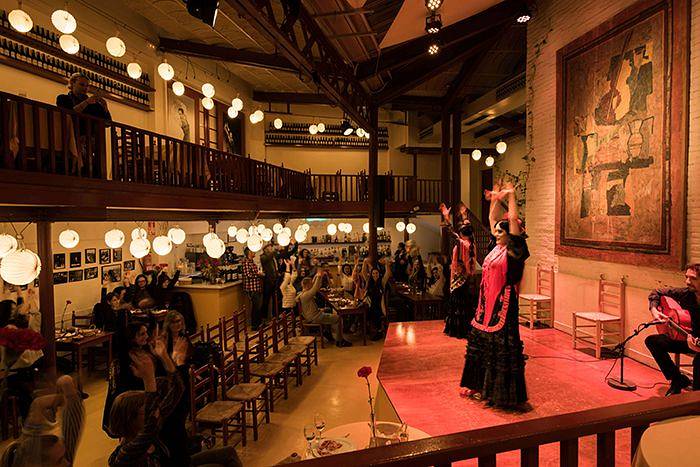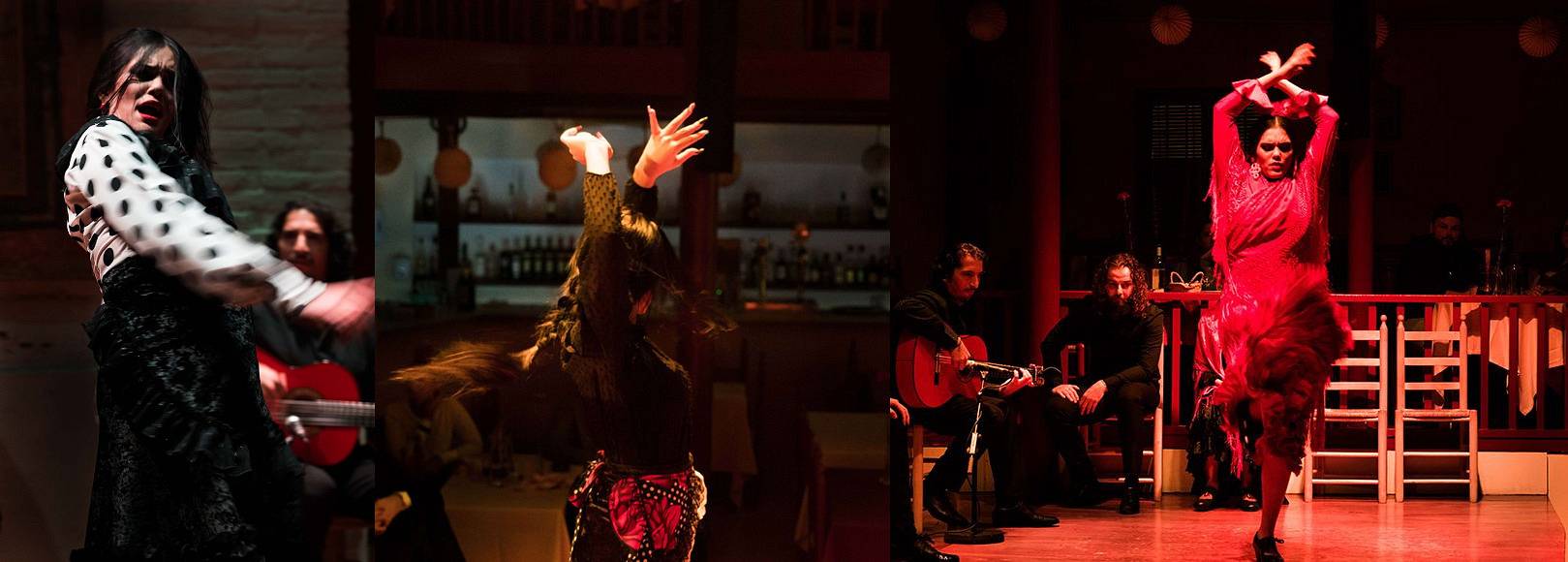
Flamenco is easy to misunderstand from a distance. For some travelers, it sounds too traditional, too dramatic, or too close to the kind of cultural performance created mainly for tourists. But in the right setting, flamenco becomes something very different: raw, intimate, emotional, and surprisingly difficult to dismiss. At Tablao de Carmen in Barcelona, many first-time visitors discover that skepticism is not a barrier to appreciating flamenco — it may actually be the perfect place to start.
Some travelers arrive in Barcelona with a long list of things they want to experience: architecture, food, beaches, museums, nightlife, hidden streets, maybe a football stadium or two. Flamenco is often somewhere on the edge of that list — not rejected exactly, but questioned.
Is it authentic?
Is it too touristy?
Will it feel staged?
Is it something you are supposed to “understand” before you can enjoy it?
These are fair questions. In fact, they may be the best possible questions to bring into a flamenco venue. Because flamenco is not at its most powerful when it is treated as a postcard version of traditional Spanish culture. It becomes memorable when the audience stops looking for a performance to consume and starts noticing something more human happening in front of them.
That is why a place like Tablao de Carmen matters. Set inside Poble Espanyol in Barcelona, it offers more than a convenient evening plan. For many first-time visitors, especially those who are unsure whether flamenco is for them, it becomes a quiet confrontation with their own assumptions.
Not everyone walks in as a believer. But many people walk out differently than they expected.
Table of Contents
The Doubts People Bring Into a Flamenco Show
Skepticism about flamenco usually comes from a reasonable place. Travelers have learned to be cautious. In popular cities, “cultural experiences” are often packaged, simplified, and sold in ways that can feel detached from the culture they claim to represent.
So when someone hears the phrase “flamenco show in Barcelona,” their guard may go up.
They may imagine exaggerated costumes, predictable drama, a room full of visitors checking off an activity from a travel itinerary. They may worry that the experience will feel designed for tourists rather than rooted in artistic truth. Some may even wonder whether flamenco belongs in Barcelona at all, especially if they associate it mostly with Andalusia.
But skepticism can be useful. It sharpens attention. It makes people watch more carefully. A skeptical viewer is not easily impressed by volume, speed, or decoration. They want to know whether what they are seeing has weight.
Authentic flamenco can handle that kind of attention.
At Tablao de Carmen, the atmosphere does not ask the visitor to suspend disbelief in a theatrical sense. Instead, it invites them to observe closely. The room is intimate. The artists are near enough for the audience to see effort, concentration, breath, and tension. Nothing feels distant enough to hide behind spectacle.
That closeness changes the question. It is no longer, “Will this entertain me?”
It becomes, “What is happening between these people on stage?”
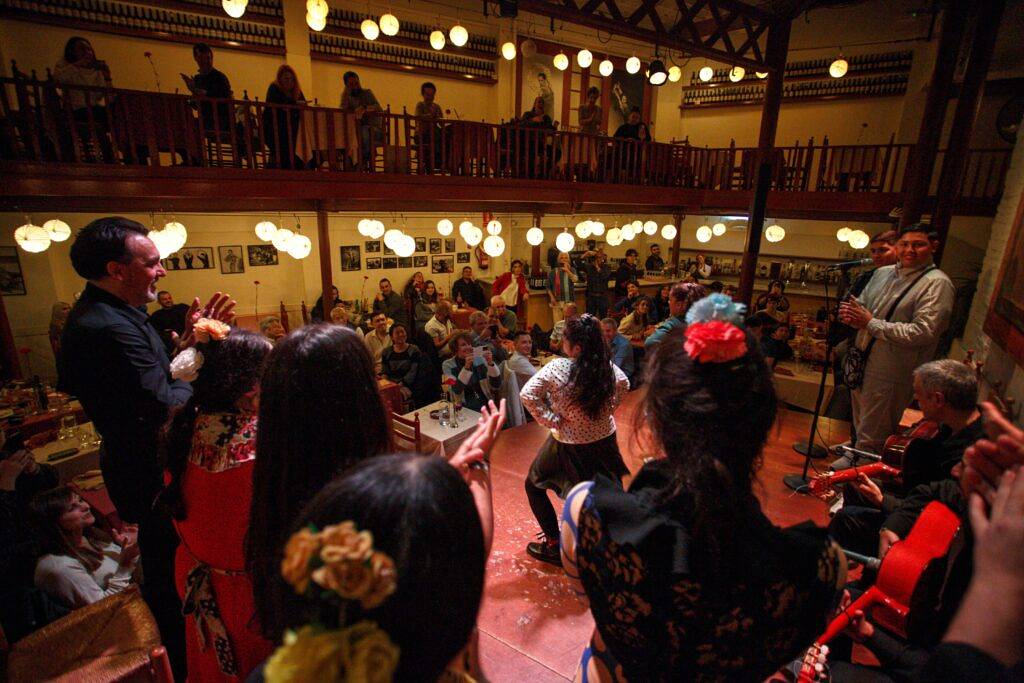
What Flamenco Really Is When You Stop Looking for a Show
One of the biggest misunderstandings about flamenco is that it is primarily dance.
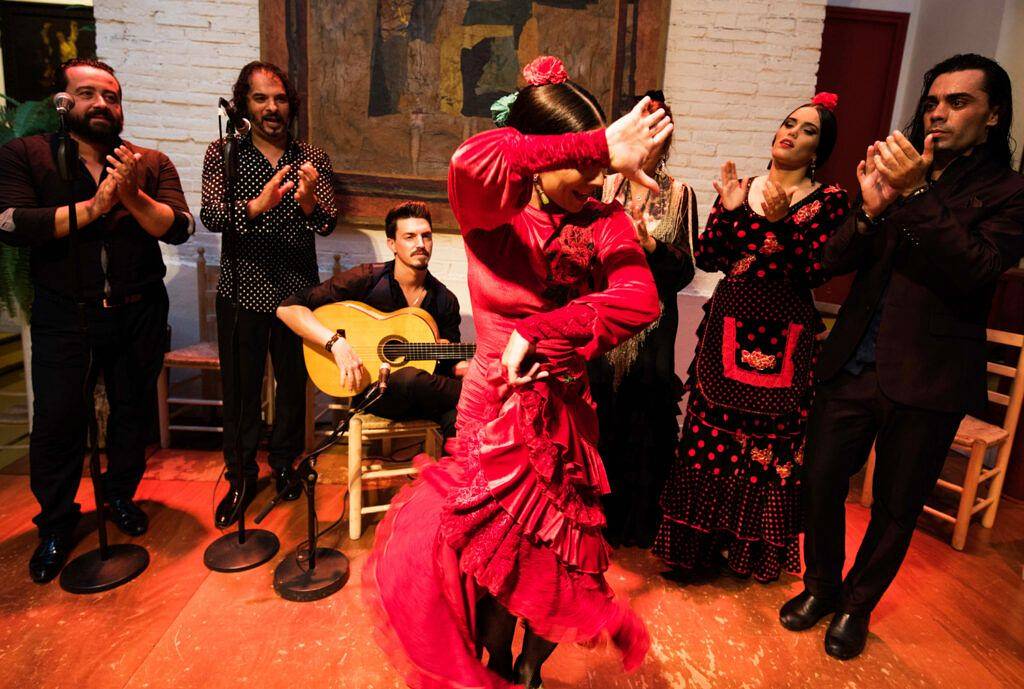
For many first-time visitors, the dancer is the obvious focal point. The movement is physical, dramatic, and immediate. The footwork cuts through the room. The body seems to argue with the rhythm. The hands, shoulders, and face carry meanings that do not need translation.
But flamenco is not only dance. It is a conversation.
The singer, the guitarist, and the dancer are not separate elements placed beside one another. They respond, challenge, support, and provoke. A live flamenco performance is built on tension between structure and instinct. There are traditions, forms, and rhythms underneath it, but what the audience feels most strongly is the sense that something is unfolding in real time.
That is where skeptics often begin to soften.
They may not know the names of the palos. They may not understand the history behind each rhythm. They may not be able to explain what the singer is expressing. But they can recognize honesty when they hear it.
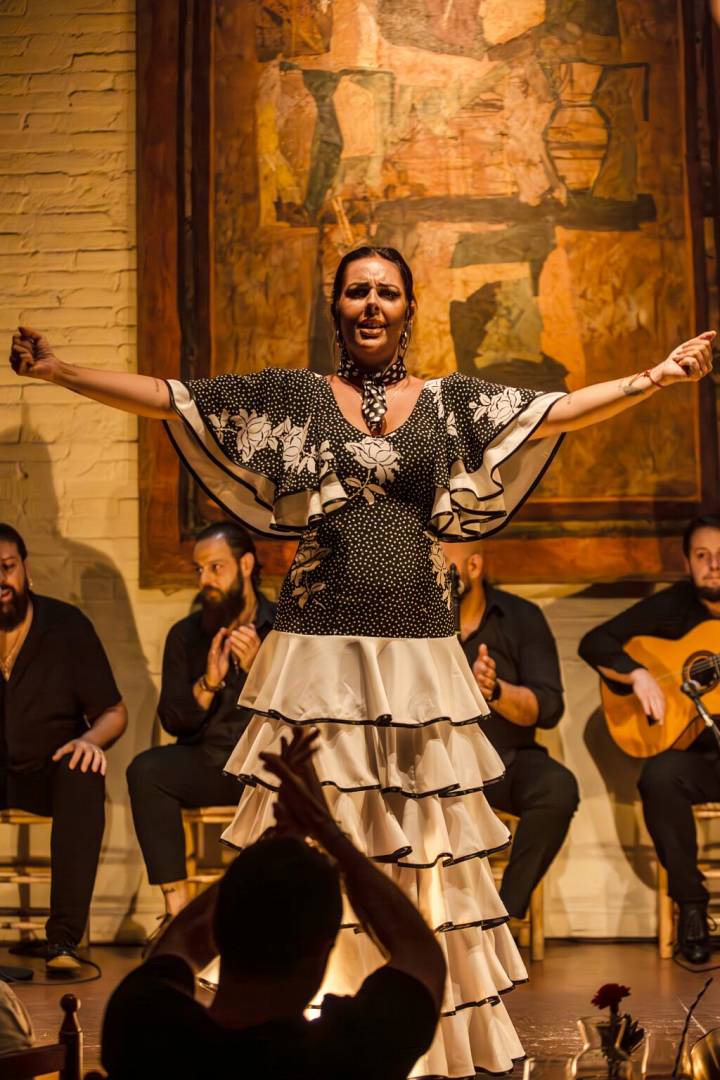
A voice cracks in a way that feels too raw to be decorative.
A guitarist pauses for a fraction longer than expected.
A dancer stands still, and the silence becomes as intense as the movement.
A sudden exchange of glances tells the audience that the artists are listening to one another, not simply repeating a rehearsed routine.
This is what makes authentic flamenco different from a cultural display. It is not trying to prove tradition from the outside. It is tradition being used as a living language.
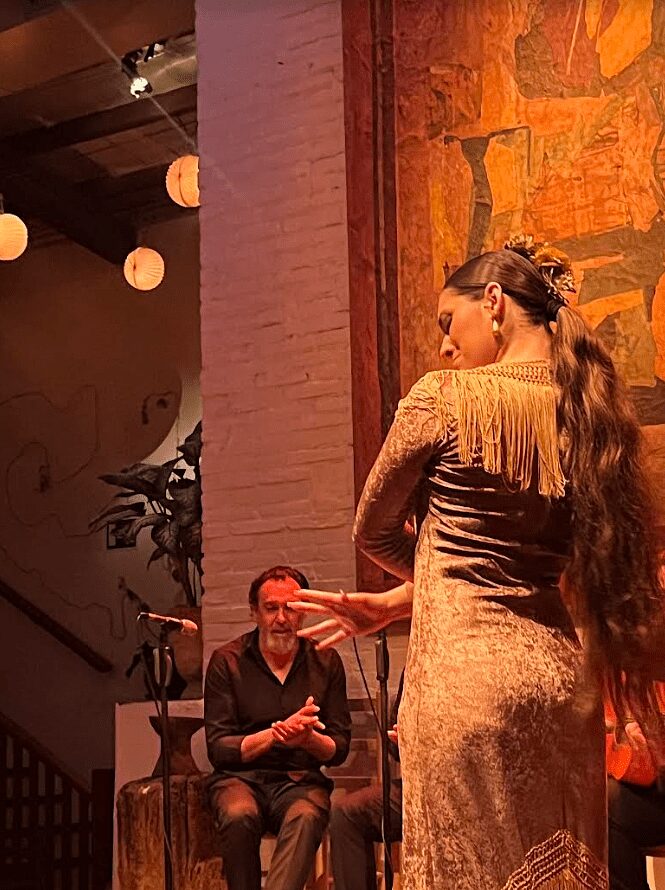
The Moment Skeptics Change Their Minds
The shift rarely happens all at once.
A skeptical visitor may spend the first minutes analyzing the room, the audience, the staging, the expectations. They may compare it to other Barcelona experiences. They may wonder whether they made the right choice for the evening.
Then something usually interrupts that mental distance.
It might be the singer’s first truly forceful phrase. It might be the way the guitarist follows the dancer’s feet as if anticipating a storm. It might be the dancer’s stillness before a sudden explosion of rhythm. It might be the realization that the artists are not performing happiness, sadness, seduction, or passion in a simple way. They are working with emotions that are more difficult to name.
Flamenco does not always ask to be liked. That is part of its power.
It can be severe, restrained, proud, wounded, playful, defiant, or almost unbearably focused. For a viewer expecting easy entertainment, this can be surprising. The performance does not flatten itself to make everyone comfortable. It trusts the audience to meet it halfway.
That trust can be disarming.
Modern travelers are used to experiences being explained, captioned, reviewed, ranked, and optimized before they even arrive. Flamenco resists that. It asks for presence instead of preparation. You do not need to be an expert. You need to pay attention.
And attention is often where appreciation begins.
What Flamenco Teaches People Who Thought They Would Not Care
The unexpected lesson of flamenco is not simply that traditional art can still be exciting. Most people already know that in theory.
The deeper lesson is that some art forms remain powerful because they do not behave like content.
Flamenco is not easily skimmed. It is not built for distracted viewing. It demands the kind of attention that many travelers do not realize they are missing until they experience it again. In a city full of visual stimulation, it creates a rare kind of intensity: a shared room, living sound, physical risk, emotional concentration.
For people who usually prefer contemporary culture, this can be one of the most interesting discoveries. Flamenco does not feel old because it is traditional. It feels immediate because it depends on presence.
There is nothing nostalgic about watching artists listen to each other in real time. There is nothing outdated about rhythm, vulnerability, pride, silence, and release. These things are not modern or ancient. They are human.
That is why a live flamenco performance can reach people who do not arrive with any special interest in Spanish culture. It does not require belief in a romantic idea of Spain. It does not require academic knowledge. It only requires the willingness to be in the room long enough for the performance to become more than an image.
At Tablao de Carmen, that room matters. The intimacy of the venue helps remove the protective distance between audience and artist. You are not watching flamenco as a distant cultural object. You are close enough to feel the effort behind it.
Why First-Time Visitors Often Become Advocates
One of the most interesting things about flamenco skeptics is how often they become the people who later recommend it most strongly.
Perhaps that is because they know exactly what the doubts feel like. They remember thinking it might be too touristy, too traditional, too dramatic, or simply not their thing. When the experience surprises them, the surprise becomes part of the memory.
They do not leave saying only, “That was a good show.”
They leave saying, “I did not expect to feel that.”
That difference matters.
A good show can be enjoyed and forgotten. A meaningful experience stays attached to the place where it happened. For travelers in Barcelona, this is especially valuable. The city offers countless beautiful sights, but not every experience creates emotional depth. Not every evening asks you to slow down, listen, and reconsider something.
Tablao de Carmen is often recommended because it gives first-time audiences a way into flamenco without reducing it. It is accessible, but not shallow. Welcoming, but not artificial. Traditional, but alive.
For visitors comparing different flamenco venues in Barcelona, this balance is important. The question should not only be where to see flamenco, but where to see it in a setting that respects the art form enough to let it breathe.
Flamenco in Barcelona Without the Postcard Feeling
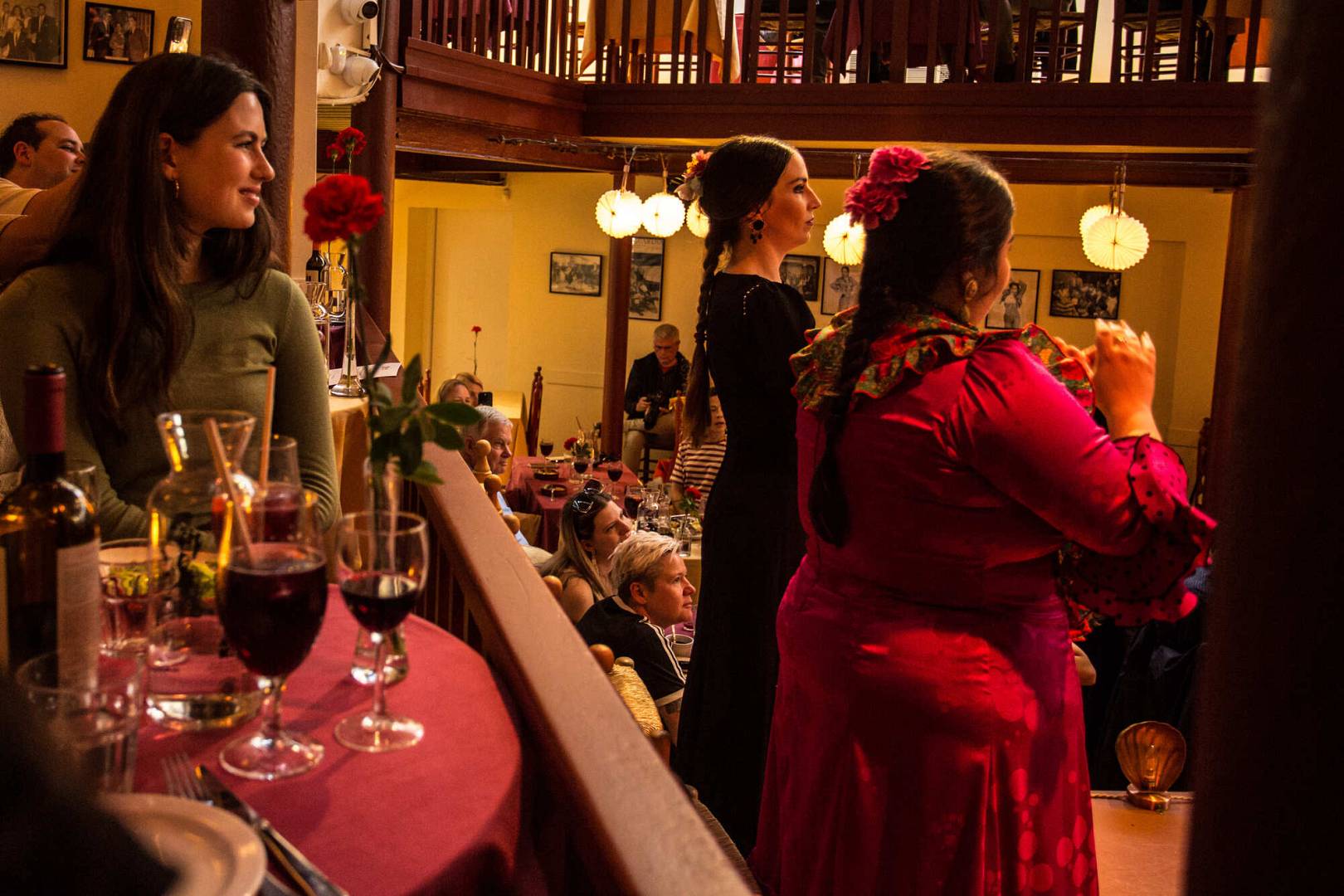
Barcelona is not always the first city people associate with flamenco, and that can make the experience even more interesting. The city is layered, international, restless, and visually modern in many ways. Yet within Poble Espanyol, Tablao de Carmen creates a setting where traditional Spanish culture can be encountered with seriousness and warmth.
This does not mean stepping outside Barcelona’s identity. It means recognizing that cities are never made of one story. Barcelona has long been a place of movement, migration, performance, and cultural exchange. Flamenco, too, carries histories of movement and emotional survival.
The best Barcelona experiences are not always the most obvious ones. Sometimes they are the ones that complicate your expectations.
A visitor may come to the city for Gaudí, the Gothic Quarter, the sea, or the food. They may not expect one of their strongest memories to come from a singer’s voice, a guitar’s restraint, or a dancer’s sudden silence. But that is exactly the kind of surprise travel is supposed to make possible.
Experience It Yourself
There is no perfect argument for flamenco.
You can read about its history, its forms, its roots, and its great artists. You can watch clips online. You can compare venues, reviews, and schedules. All of that may help you choose where to go, but it will not explain what happens when the room becomes quiet and the first notes begin.
Flamenco makes the most sense when it is experienced directly.
For skeptical travelers, that may be the best reason to go. Not because someone has convinced you in advance, but because you are willing to test your doubts against the reality of a live performance.
If you are looking for an authentic flamenco show in Barcelona, Tablao de Carmen offers one of the city’s most intimate and historically resonant settings. Located in Poble Espanyol, it gives first-time audiences a chance to encounter flamenco not as a tourist attraction, but as a living art form built on emotion, discipline, and human connection.
Some experiences cannot be fully understood from the outside. Flamenco is one of them.
Tablao de Carmen and let the performance answer the questions that words cannot.